Breaking Stigma, Building Recovery
By Laurian Ward, Counselling Psychologist
This week of Mental Health Awareness Month focuses on Serious Mental Illness (SMI) and Emotional Disturbance (SED)—and the urgent need to reduce stigma while promoting recovery for people and families.
What Are SMI and SED?
-
Serious Mental Illness (SMI) includes conditions like schizophrenia, bipolar disorder, and severe depression that significantly impair daily functioning.
-
Serious Emotional Disturbance (SED) refers to children and adolescents whose mental health disorders seriously impact home, school, or community life.
These are real medical conditions, not character flaws or weaknesses. And crucially, they are treatable.
The Stigma That Hurts
Despite progress, stigma remains a deadly barrier:
-
Nearly 60% of adults with SMI do not receive treatment, often due to fear of judgment.
-
People with serious mental illness die 20–25 years earlier than the general population, partly from delayed care and discrimination.
-
Children with SED are often mislabeled as “bad” or “difficult” rather than getting the help they need.
-
Families face shame, isolation, and blame from their communities.
Stigma keeps people from seeking help. When help is delayed, suffering worsens. This is why changing the conversation saves lives.
Recovery Is Real
The most important message: recovery from serious mental illness is possible.
With proper treatment:
-
70–80% of people experience significant symptom improvement
-
Many regain independence, maintain relationships, and find purpose
-
Early intervention—especially for children—dramatically improves outcomes
-
Setbacks are part of the journey, not failure—they mean the plan needs adjustment
Recovery looks different for everyone, but it happens.
Families: You’re Not Alone
When someone has SMI or SED, the whole family is affected. You may feel:
-
Worry, confusion, grief
-
Blame (from others or yourself)
-
Burnout from caregiving
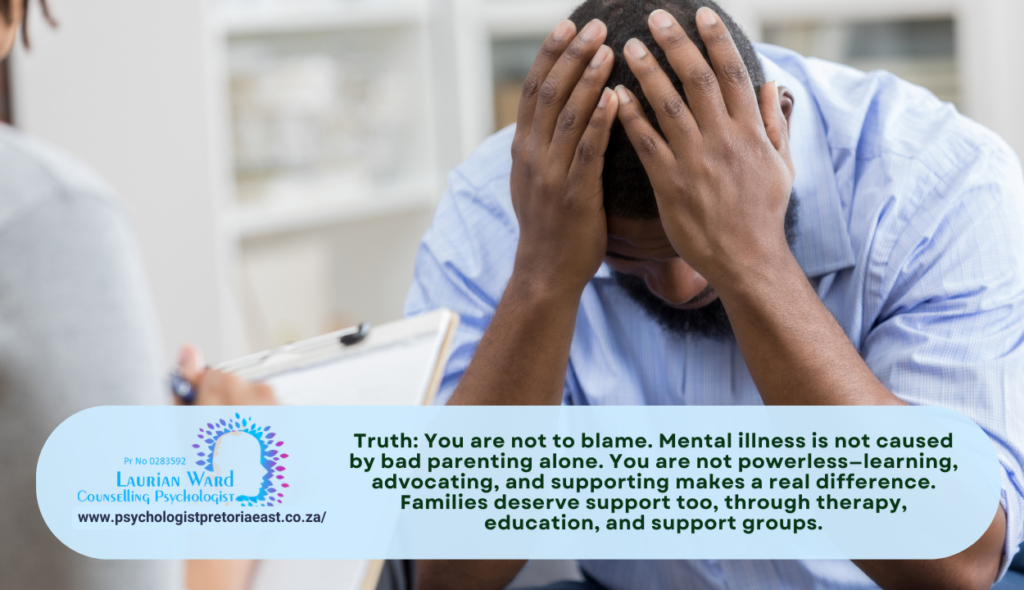
Truth: You are not to blame. Mental illness is not caused by bad parenting alone. You are not powerless—learning, advocating, and supporting makes a real difference. Families deserve support too, through therapy, education, and support groups.
How We Reduce Stigma
If you live with SMI/SED:
-
Your diagnosis doesn’t define you
-
Treatment works—reach out when ready
-
Connect with others; you’re not alone
If you love someone with SMI/SED:
-
Listen without judgment: “I’m here for you”
-
Educate yourself about their condition
-
Respect their agency and independence
-
Get support for yourself too
Use person-first language: “A person with schizophrenia,” not “a schizophrenic.” Challenge stereotypes when you hear them.
Treatment Works
Effective approaches include:
-
Psychotherapy – builds coping skills and insight
-
Medication – balances brain chemistry
-
Family therapy – improves communication
-
Peer support – reduces isolation
-
Community services – housing, vocational help
Combined, these create the best outcomes.
Your Journey Matters
Each phase of recovery has different meaning—a different version of you emerges. In crisis, you learn survival. In recovery, you rebuild trust. In thriving, you find purpose beyond diagnosis. Your pace is valid.
A Call to Compassion
SMI and SED are manageable with treatment, support, and hope. The barrier isn’t that recovery is impossible—it’s that too many never get the chance to try.
-
If you’re struggling, please reach out. You deserve care.
-
If someone you love is struggling, stay close and encourage treatment.
-
If you hear stigma, gently correct it.
Recovery is happening right now for millions. Let’s make sure everyone has the opportunity to be part of that story.
About Laurian Ward
Laurian Ward is a Counselling Psychologist specializing in mental wellness, trauma healing, and serious mental illness support. She works with individuals and families navigating SMI and SED, providing evidence-based therapy and compassionate recovery planning.
You don’t have to face this alone. Contact Laurian for confidential counseling.