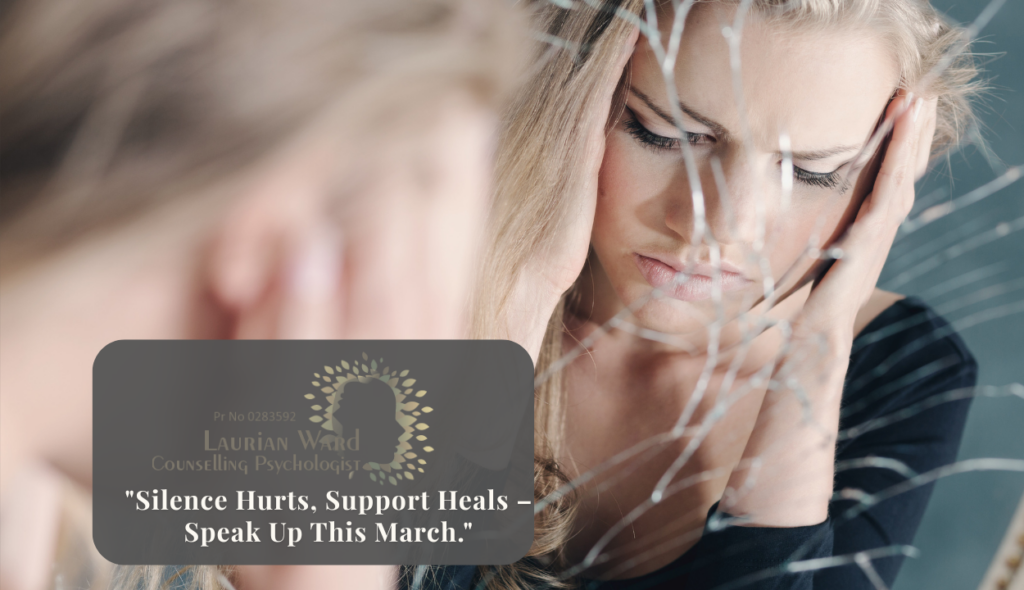
It is heartbreaking to see your teenager or young adult struggling with self-harm. March is Self-Harm Awareness Month, shining a light on non-suicidal self-injury (NSSI)—deliberate self-harm like cutting or burning without wanting to die, often as a way to cope with overwhelming emotions like anxiety or pain. You’re not alone; in South Africa, studies show 33-56% of high school and university students have experienced this, especially girls and those aged 15-24.
Recognizing the Signs
Self-harm often starts in adolescence as a hidden release for intense feelings tied to depression, stress, or trauma. Unlike suicide attempts, it’s about momentary relief, but it can worsen, with 16% recurrence yearly and risks of escalation or even unnatural deaths like suicide later. Watch for unexplained cuts, isolation, or mood swings—it’s a silent cry your child may not voice.
Why Self-harm Hits Home in March
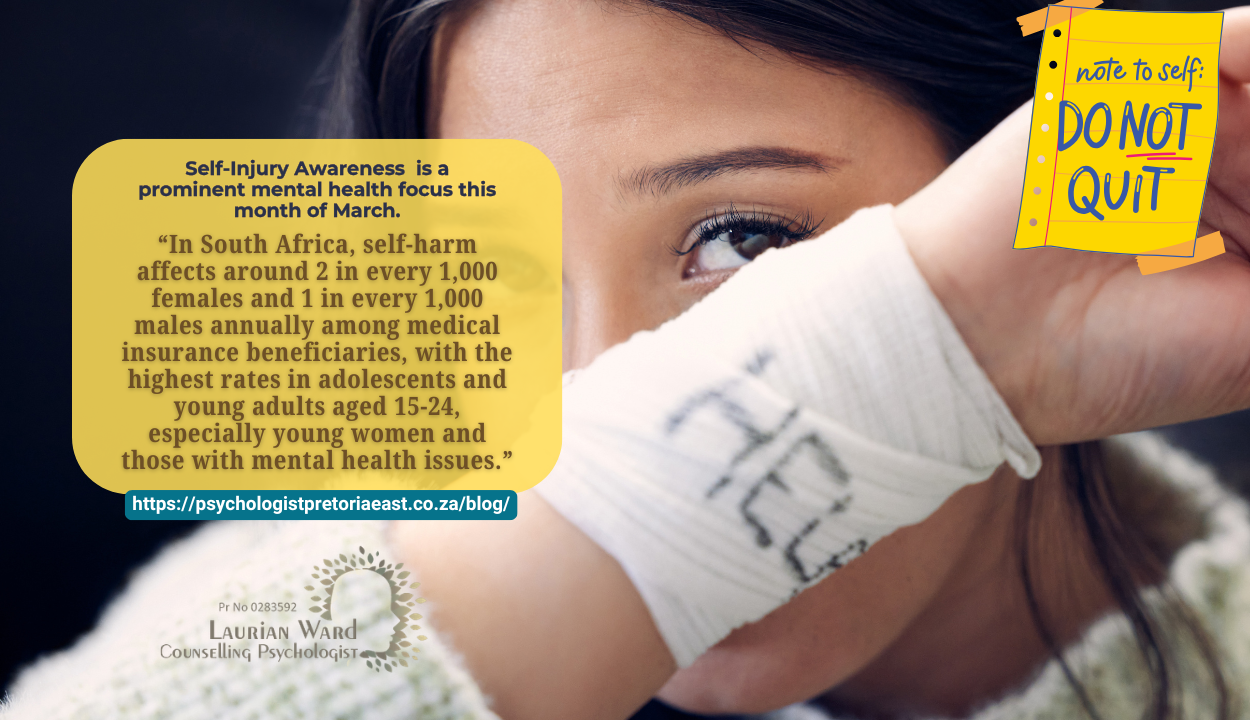
Here in SA, with few mental health pros—one psychiatrist per 100,000—stigma keeps many silent. Research on over 1.35 million shows 2 in 1,000 young women and 1 in 1,000 young men seek help post-self-harm, but males face higher risks afterward. March 1’s Self-Injury Awareness Day is your cue to act gently.
How You Can Help
Your support is powerful—most who self-harm want to stop. Start with open, non-judgmental talks: “I’m here, no matter what.” School programs teaching coping skills, emotional regulation, and problem-solving cut NSSI effectively. Encourage life orientation classes for self-esteem.
A Mother’s Strength
You can guide your child from pain to healing. This March, break the silence—your love builds resilience. Reach out today; recovery is possible. This March, take the first step toward healing—contact Laurian Ward Counselling Psychologist today for compassionate support, coping strategies, and family guidance. Break the silence; book your session now and reclaim hope. Reach out via her website or direct message.