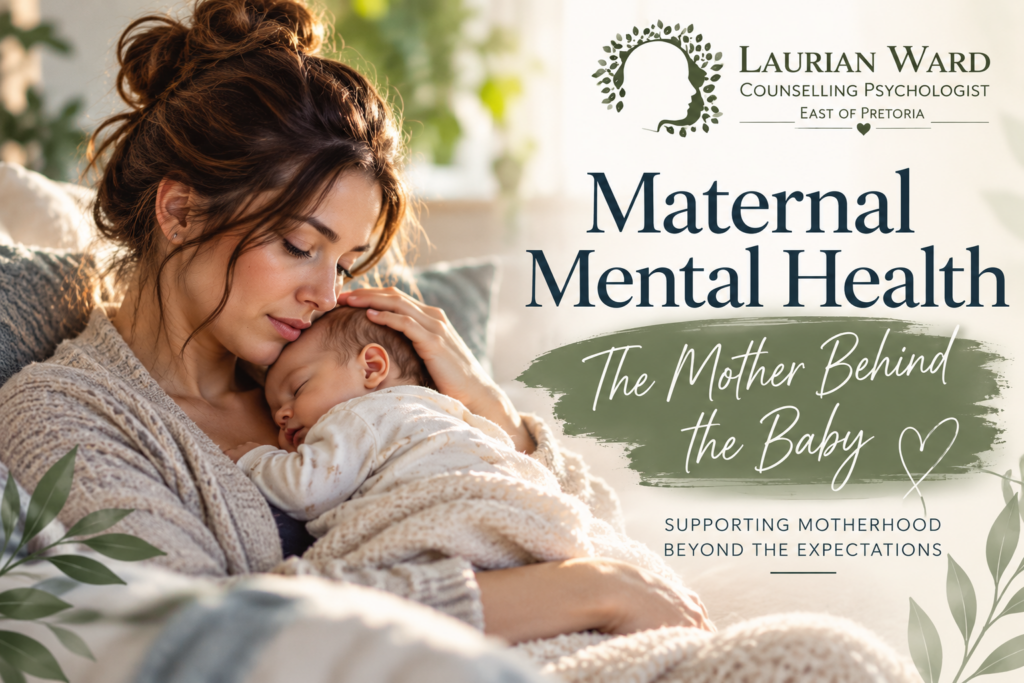
October is Mental Health Awareness Month in South Africa, making it an important time to talk about an area that is often overlooked: maternal mental health. Much of the attention surrounding pregnancy and childbirth naturally focuses on the physical health of the mother and the wellbeing of the baby. Yet the emotional and psychological wellbeing of the mother is equally important.
Pregnancy, childbirth and the first year of motherhood can bring enormous emotional and psychological changes. A mother may experience joy and love while simultaneously feeling exhausted, anxious, overwhelmed or uncertain. She may struggle with changes to her identity, relationships, body, independence and expectations of what motherhood would be like. These experiences are not always openly discussed, particularly when a mother feels that she is expected to be happy and grateful.
Maternal mental health conditions can include depression and anxiety, and they can develop during pregnancy as well as after childbirth. The World Health Organization estimates that around one in five women experience a mental health condition during pregnancy or within the first year after childbirth. These conditions are common and, importantly, treatable.
It is also important to understand that struggling emotionally does not mean a mother does not love her child. A woman can be deeply devoted to her baby while finding motherhood difficult. Persistent sadness, excessive worry, feeling unable to cope, withdrawal, loss of interest in things previously enjoyed, or difficulty functioning in everyday life may indicate that additional support is needed.
Maternal mental health should therefore be part of the conversation from pregnancy onwards. Asking a mother how she is coping, not simply how the baby is doing, can open an important door.
Seeking psychological support is not a sign of failure. It can provide a safe space to understand what is happening emotionally, work through difficult experiences and develop healthier ways of coping during a major life transition.
This October, let’s remember to ask about the mother behind the baby. Her mental health matters too.
If you are experiencing persistent emotional distress during pregnancy or after childbirth, consider speaking with a qualified mental health professional or healthcare provider.