By Laurian Ward, Counselling Psychologist
As we age, mental health becomes just as critical as physical health—yet it’s often overlooked. May is Mental Health Awareness Month, and this week’s focus is supporting older adults’ mental health, with an emphasis on enhancing quality of life, independence, and social connections. This message is especially important because how you think about aging directly shapes how you live it.
The Reality: Mental Health in Later Life
The statistics paint a clear picture:
-
An estimated 20% of adults aged 60 and older worldwide experience a mental or neurological disorder (excluding head injury), according to the World Health Organization.
-
Depression and anxiety are common but often underdiagnosed in older adults, with up to 7% experiencing major depression and many more dealing with subthreshold symptoms that still impair quality of life.
-
Loneliness and social isolation are serious concerns—24% of adults aged 65 and older in the U.S. are considered socially isolated, which increases risks of depression, cognitive decline, and even early mortality.
-
Yet, people who maintain positive attitudes about aging live 7.5 years longer than those with negative views, according to landmark research from Yale School of Public Health.
These numbers tell us something profound: mental health in older age is not just about managing problems—it’s about actively cultivating well-being.
What You Think Becomes What You Do
There’s a powerful psychological truth at work here: your beliefs about aging shape your behaviors, which shape your outcomes. If you believe aging means decline, dependency, and loss, you’re more likely to withdraw, give up on goals, and accept poor quality of life as inevitable. But if you see aging as a phase of wisdom, new possibilities, and continued growth, you’ll take actions that support independence, connection, and purpose.
Keeping Agency: Living Dignified and Responsible in This Phase
Agency means you remain the author of your life, even as circumstances change. Here’s how to maintain it:
1. Root Your Responsibility in What You Control
You can’t control the physical changes that come with age, or the fact that you’ll lose people you love. But you can control:
-
How you respond to loss and grief
-
Whether you stay socially connected
-
How you care for your physical and mental health
-
What meaning you create in this chapter
-
The boundaries you set with others
Quality of life will very much depend on where you root your responsibility. If you root it externally—waiting for others to provide purpose, care, or validation—you’ll feel powerless. If you root it internally, you reclaim dignity and autonomy.
2. Grieve Losses, But Don’t Let Them Define You
While grief is natural and necessary, you don’t have to let it become your entire identity. Acknowledge the pain, honor the memories, and allow yourself to feel. Then, ask yourself: Given that this person is gone, how do I still want to live? What values did they embody that I can continue? This is how you carry loved ones with you without being paralyzed by their absence.
3. Each Phase Has a Different Meaning—and a Different You
You are not the same person you were at 30, 40, or 50—and that’s not a loss. It’s evolution. Each life phase has its own meaning, challenges, gifts, and version of you. The “you” of this phase is not less than—you’re different, with different strengths, priorities, and capacities. Honoring that difference is key to living with authenticity and dignity.
A Call to Action for Older Adults—and Those Who Love Them
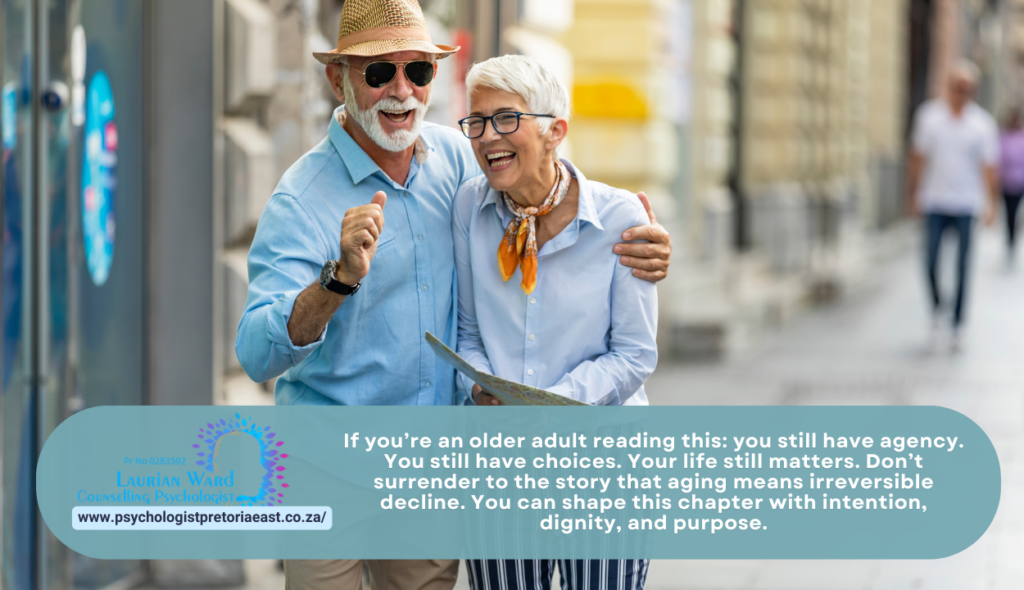
If you’re an older adult reading this: you still have agency. You still have choices. Your life still matters. Don’t surrender to the story that aging means irreversible decline. You can shape this chapter with intention, dignity, and purpose.
If you’re a family member, friend, or caregiver: support autonomy, not dependency. Encourage independence, listen deeply, include older adults in decisions, and resist the urge to “take over” unless safety is truly at risk. Your loved one’s mental health depends on feeling respected and valued—not pitied or controlled.
Final Thought: Your Mindset Is Your Most Powerful Tool
The quality of your life in later years will very much depend on:
-
How you think about this phase (decline vs. growth, loss vs. wisdom)
-
What you allow (resignation vs. engagement, isolation vs. connection)
-
Where you root your responsibility (externally, waiting for others vs. internally, owning your well-being)
You are the author of this chapter. Write it with courage, intention, and hope.
About Laurian Ward
Laurian Ward is a Counselling Psychologist specializing in mental wellness, trauma healing, and life transitions. She supports individuals through all life phases, helping them reclaim agency, find meaning, and live with dignity.
If you or an older loved one is struggling with mental health, isolation, grief, or life transitions, Laurian offers compassionate, evidence-based counseling. Reach out to start the conversation.