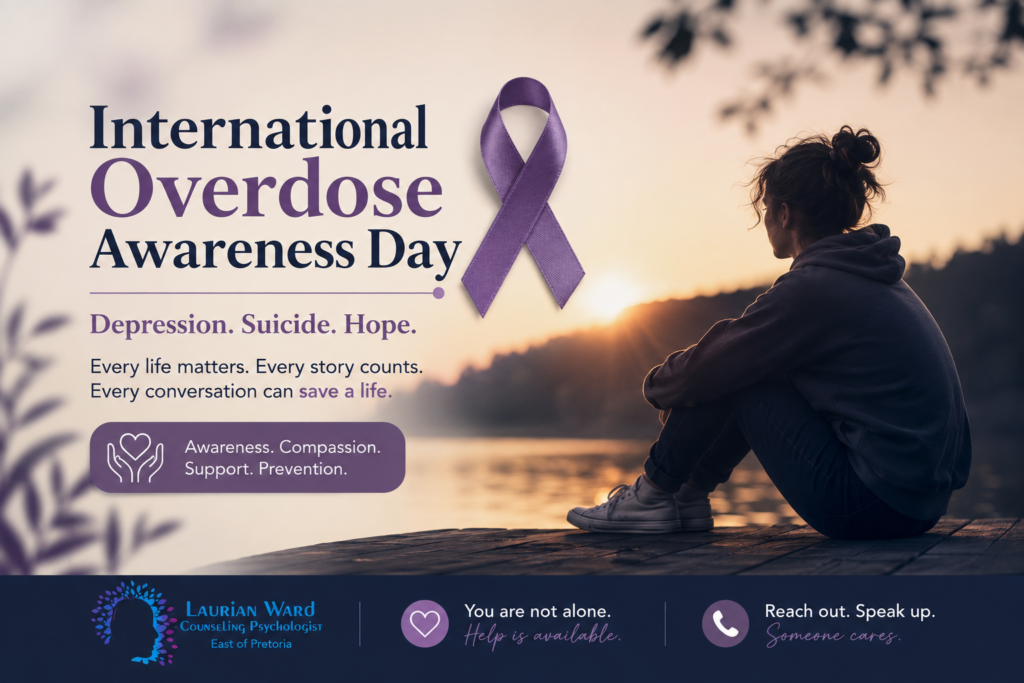
Every year on 31 August, International Overdose Awareness Day reminds us of the lives lost to overdose and the many people who continue to struggle with mental illness, substance use and emotional pain. It is also an opportunity to strengthen suicide awareness by recognising that depression, addiction and suicide often intersect.
Depression is far more than feeling sad. It is a medical condition that affects how a person thinks, feels and functions. When left untreated, depression can lead to feelings of hopelessness, social withdrawal and, for some individuals, thoughts of suicide. Many people who experience an overdose are also living with untreated or undertreated mental health conditions, making early intervention critically important.
Adolescence is one of the most vulnerable periods for mental health. During the teenage years, the brain is still developing—particularly the areas responsible for emotional regulation, impulse control and decision-making. At the same time, young people are navigating identity, academic pressure, social media, relationships and increasing independence. When combined with trauma, bullying, family conflict or substance use, these challenges can significantly increase the risk of depression and suicidal thoughts.
In South Africa, the need for suicide awareness has never been greater. The World Health Organization estimates a suicide rate of approximately 9 per 100,000 adolescents aged 15–19 years in South Africa. More recently, the National Department of Health reported that approximately 7,426 children under the age of 18 were treated for suicide attempts between April and December 2024, highlighting the growing mental health crisis affecting our youth.
Research consistently shows that suicide is rarely caused by a single event. Instead, it often develops through the interaction of biological vulnerability, emotional distress, environmental stressors and a lack of timely support. This means suicide is also preventable. Recognising the warning signs—persistent sadness, withdrawal from family and friends, giving away possessions, changes in sleep or appetite, feelings of hopelessness, or talking about death—can save a life.
Perhaps the most powerful protective factor is connection. Feeling heard, understood and supported can make an enormous difference. Professional counselling provides a safe space to process difficult emotions, develop healthy coping strategies and address depression before it reaches a crisis point.
International Overdose Awareness Day reminds us that behind every statistic is a person, a family and a story. By promoting suicide awareness, reducing stigma and encouraging people to seek help early, we can offer hope where there may seem to be none.
If you or someone you know has been struggling with depression or thoughts of suicide, please remember that asking for help is a sign of courage, not weakness. No one should have to face emotional pain alone.