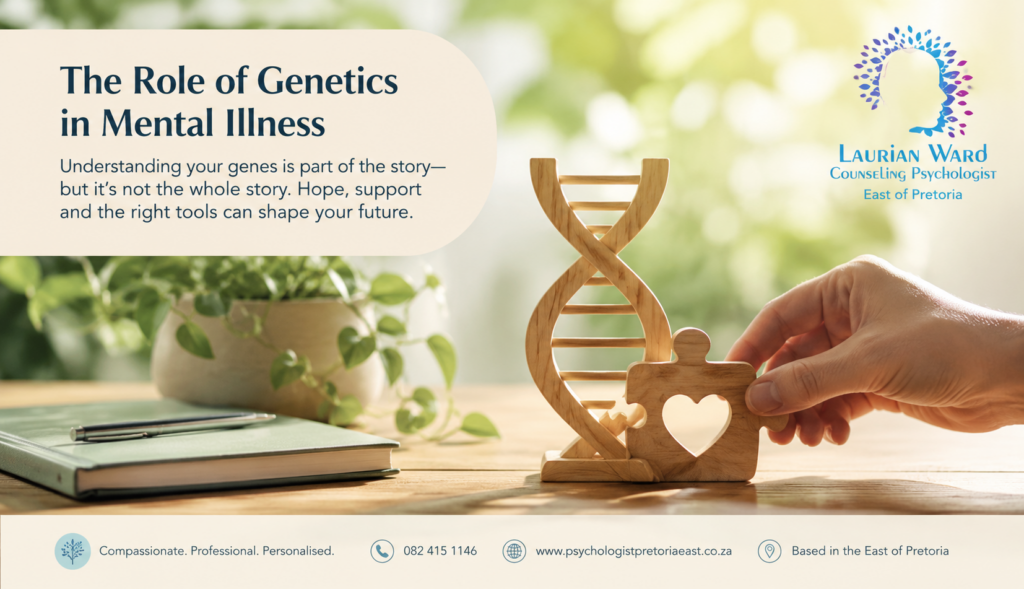
Genetics can increase mental illness but is not destiny
One of the questions I am often asked is, “If mental illness runs in my family, does that mean I will develop it too?”
The answer is reassuring: genetics can increase vulnerability, but they do not determine your future.
Research has consistently shown that many mental health conditions, including depression, anxiety disorders, bipolar disorder and schizophrenia, have a genetic component. Having a close family member with one of these conditions may increase your likelihood of experiencing similar challenges. However, genes tell only part of the story.
Think of genetics as loading the gun, while life experiences pull—or don’t pull—the trigger.
Our emotional wellbeing develops through a complex interaction between our genetic makeup, our environment and our life experiences. Childhood relationships, trauma, chronic stress, significant life events, physical health, sleep, social support and even lifestyle choices all influence whether a genetic vulnerability becomes a mental health condition.
This concept is known as the gene-environment interaction.
For example, two siblings may inherit a similar genetic predisposition towards anxiety. One may grow up with supportive relationships, effective coping skills and healthy emotional regulation, while the other experiences chronic stress or trauma. Despite sharing much of the same genetic material, their mental health outcomes may be very different.
Field of epigenetics
Modern neuroscience has also introduced us to the fascinating field of epigenetics. Epigenetics explores how life experiences can influence whether certain genes are switched “on” or “off.” In other words, while we cannot change the genes we inherit, our environment and experiences can influence how those genes are expressed throughout our lives.
This is one of the reasons therapy can be so powerful.
Therapy does not change your DNA, but it can help change the way your brain responds to stress, processes emotions and builds resilience. Through developing healthier coping strategies, improving relationships, processing difficult experiences and learning emotional regulation, many people significantly reduce the impact that genetic vulnerabilities may have on their lives.
It is also important to remember that mental illness is not a personal weakness or a character flaw. Like many medical conditions, it often develops through a combination of biological, psychological and social factors. Understanding this can help reduce stigma and encourage people to seek support sooner rather than later.
As a Counselling Psychologist, I believe every individual has strengths that can be nurtured, regardless of their family history. While we cannot choose the genes we inherit, we can make choices that support our mental wellbeing. Seeking help is one of those choices.
If you have a family history of mental illness or have noticed changes in your emotional wellbeing, early intervention can make a significant difference. Therapy offers a safe and confidential space to better understand yourself, develop practical coping strategies and work towards a healthier, more fulfilling life.
Your genetics may shape part of your story, but they do not have to write the ending.