For many people, the word therapy still carries unnecessary baggage.
Some believe it is only for people who are “falling apart.” Others wonder how someone who doesn’t know them could possibly help. Some fear being judged by friends, family, or colleagues. And for many successful professionals, there is an unspoken belief that seeking therapy somehow means they have failed.
The reality could not be further from the truth.
Think about your vehicle for a moment. If you drive a Toyota Land Cruiser, you understand the importance of regular servicing. You do not wait until the engine seizes before taking it in. You maintain it because you rely on it. You understand that prevention is better than repair.
Therapy works in much the same way.
Most people seek therapy when they feel overwhelmed, exhausted, anxious, depressed, or when relationships begin to suffer. While these are important reasons to reach out, therapy offers much more than crisis intervention. It provides a space to maintain your emotional wellbeing, gain clarity, process life’s challenges, and hear yourself think without interruption or judgment.
Many people live busy lives filled with responsibility. They are managing businesses, careers, marriages, children, finances, and the expectations of others. They spend so much time caring for everyone else that they forget to care for themselves. Over time, their emotional resources become depleted. When that happens, people often become a version of themselves they do not recognise. They become irritable, disconnected, exhausted, or emotionally unavailable. Not because they are bad people, but because they have been pouring from an empty cup for too long.
Therapy provides a safe, contained space to pause and reflect. It allows you to explore your deepest concerns, struggles, hopes, and aspirations with someone trained to help you make sense of what you are experiencing. Sometimes the greatest value of therapy is simply having a space where your needs matter too.
This is particularly important for adolescents. Many parents assume that emotional distress is simply part of growing up. While adolescence certainly comes with challenges, persistent sadness, withdrawal, anxiety, self-harm, or hopelessness should never be dismissed as “just a phase.” Across the world, mental health concerns among teenagers have increased significantly, and suicide remains one of the leading causes of death among young people.
Seeking therapy early can make a profound difference.
The strongest people are not those who never ask for help. They are the ones who recognise when support could benefit them and take action before a crisis develops.
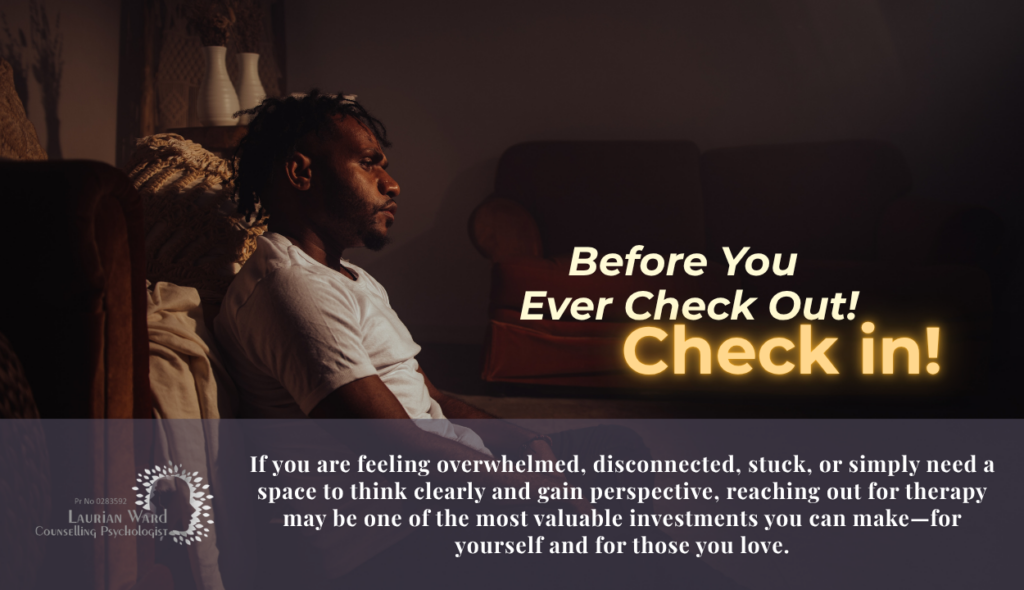
Just as you service your vehicle to ensure it performs at its best, therapy helps you maintain the most important resource you have: yourself. If you are feeling overwhelmed, disconnected, stuck, or simply need a space to think clearly and gain perspective, reaching out for therapy may be one of the most valuable investments you can make—for yourself and for those you love.
To make an appointment or discuss how therapy can support you or your child, contact Laurian Ward Counselling Psychologist today. Taking care of yourself is not selfish; it is one of the most important ways you can care for the people who depend on you.