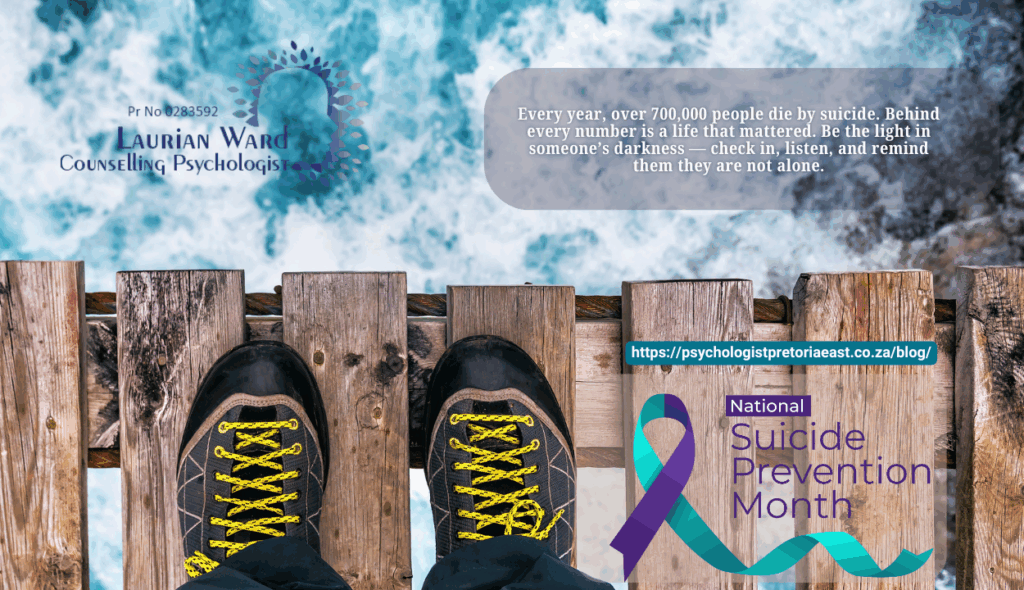
This month is about suicide awareness, break stigma, and remember that behind every number is a life, a family, and a story.
Globally, suicide claims more than 700,000 lives each year, making it one of the leading causes of preventable death. What is striking is the difference between men and women when it comes to suicide. Although women attempt suicide more often, men are far more likely to die by suicide. In fact, worldwide, men are between 2 to 4 times more likely to complete suicide than women. In the U.S., men account for almost 80% of all suicide deaths, and in some countries the gap is even wider (CDC).
Why this disparity? One key reason lies in methods. Women are more likely to use less lethal means, such as overdose or poisoning, which may leave room for intervention. Men, on the other hand, tend to choose more lethal methods like firearms or hanging, which drastically reduces the chance of survival. Social factors also play a role: cultural expectations often discourage men from showing vulnerability or seeking help, leaving them more isolated. Many struggle silently with depression, substance use, or feelings of hopelessness, without ever sharing the depth of their pain.
Another tragic reality is that suicide is not always predictable but suicide awareness is. While some people do show warning signs—changes in mood, withdrawal, talking about feeling like a burden—others may appear to be coping on the surface. Families and friends are often left shocked, saying they “never saw it coming.” This is why open conversations about mental health are critical, especially with men who may be less likely to express their struggles.
To create suicide awareness is a step in the right direction and makes prevention possible. By challenging the stigma around mental health, checking in with loved ones, and making support accessible, we can change the statistics. Small conversations can save lives. Restricting access to lethal means, encouraging men to seek professional help, and fostering communities where vulnerability is seen as strength are all steps in the right direction (WHO).
If you are struggling—or if you notice someone pulling away, feeling hopeless, or expressing despair—please reach out. You are not a burden. You are not alone. Let’s be aware and let’s take part in creating bigger suicide awareness.
I am Laurian Ward, Counselling Psychologist, and I am here to support you. Your life matters.