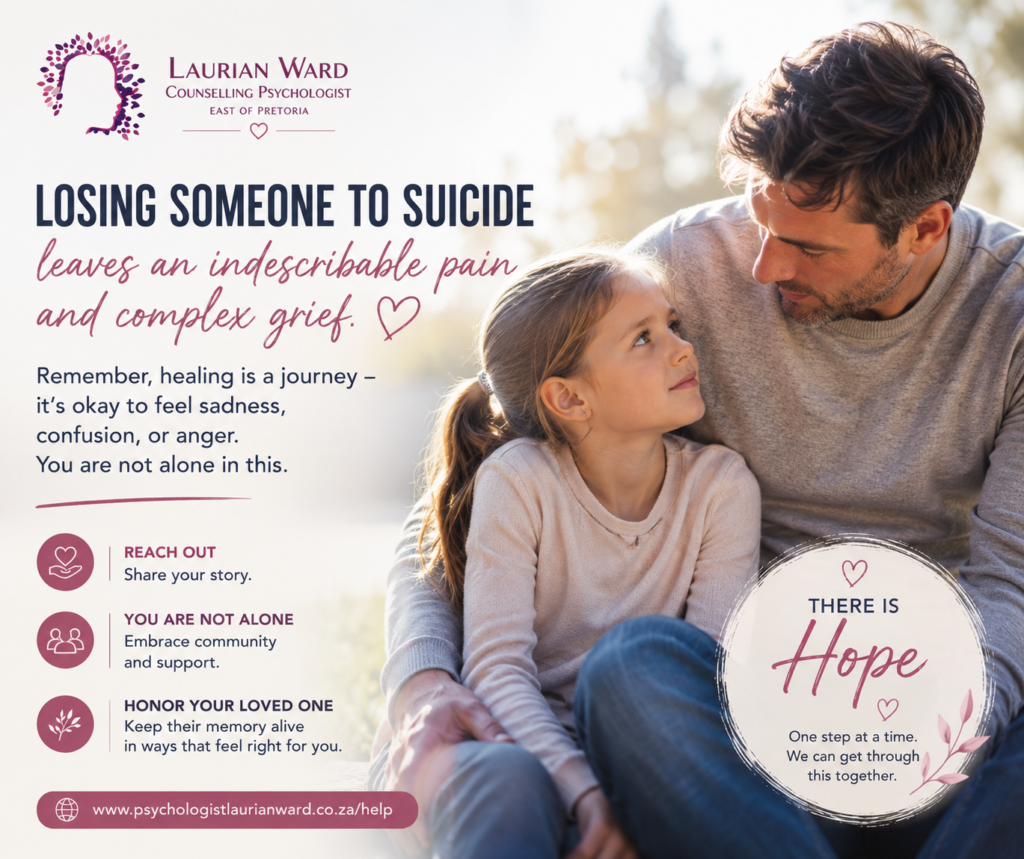
What Is Suicide Grief — And Why It’s Important to Understand
Suicide grief is a complex and often misunderstood form of emotional pain. It’s not only the deep sorrow experienced by those left behind after a suicide, but also the invisible weight carried by individuals who are grieving something so intensely—a loss of identity, connection, dignity, belonging, or purpose—that suicide begins to feel like an escape from the unbearable. In both cases, suicide grief is rooted in loss—but not always a loss others can see.
Understanding Suicide: It’s Not Always About Wanting to Die
Many people assume suicide is about wanting to die. But in truth, it’s more often about wanting to stop the pain. For someone contemplating suicide, their emotional distress has often become so overwhelming that their internal coping systems have shut down. They are grieving something deeply:
- The loss of a loved one
- The collapse of a relationship
- A devastating failure
- Childhood trauma resurfacing in adulthood
- Chronic emotional invisibility or shame
This grief—if not processed, held, or acknowledged—ferments into despair. And for some, that despair becomes lethal.
What Is Suicide Grief?
Suicide grief happens in two forms:
Grief After a Suicide
When someone we love dies by suicide, we are often left with layers of confusion, guilt, anger, and isolation. It is a kind of grief that leaves us questioning everything we knew about that person—and about ourselves.
The Grief That Leads to Suicidal Ideation
This is the less visible kind: the deep grief that lives inside a person before a suicide attempt. It might be caused by:
-
- Rejection or abandonment
- Compounded trauma
- Internalized shame
- Social isolation
- Loss of dignity or control
- The slow erosion of hope
Both are urgent. Both deserve attention. Both can be fatal if ignored.
Red Flags: How to Recognize Someone Struggling with Suicide Grief
Suicide grief doesn’t always look dramatic. It often hides in silence, withdrawal, or politeness. Be alert to the following signs:
- Sudden withdrawal from friends, family, or activities they once enjoyed
- Talking about feeling like a burden, or saying things like “It would be better if I weren’t here.”
- Giving away belongings or tying up loose ends unexpectedly
- Sudden calmness after a long period of depression
- Self-isolation, especially after a loss or traumatic event
- Expressions of deep hopelessness or worthlessness
- Increased use of alcohol or drugs
- Over-apologizing or emotionally detaching from loved ones
- Drastic mood swings or reckless behavior
Even subtle changes—like less eye contact, emotionally flat responses, or avoiding future-oriented conversations—can be signs of internal collapse.
How to Reach Out Without Pushing Away
You don’t need to “fix” someone to help them. Your presence and willingness to witness their pain without judgment or agenda is powerful.
Here’s how you can reach out:
- Ask directly, without fear:
“Are you feeling so overwhelmed that you’ve thought of hurting yourself?”
Asking doesn’t implant the idea. It opens a door. - Use the word “grief”:
“I know you’ve lost something big—even if others don’t see it. That grief matters.”
Naming it can relieve the pressure of pretending. - Stay close:
Text. Call. Sit in silence. Show up. Let them know they’re not a burden. - Connect them to help:
Support them in finding a therapist, trauma-informed counselor, or crisis line. In South Africa, you can call SADAG at 0800 567 567.
Safeguarding Yourself When Supporting Others
Being the person someone leans on is sacred—but it’s also heavy. Here’s how to take care of yourself:
- Know your limits: You’re not their therapist, and you don’t need to have the answers.
- Stay emotionally honest: Say, “I care deeply, but I also feel overwhelmed. Let’s get professional help together.”
- Protect your nervous system: Take walks, sleep well, journal, and talk to a mental health professional.
- Don’t isolate yourself in the role of “rescuer.” Support should always be a team effort.

Final Thought: You Never Know What Someone Is Grieving
The most dangerous grief is often the invisible kind—the losses people carry in silence. If someone seems “fine,” check again. If you see someone pull away, lean in. If you notice someone laughing but not smiling with their eyes, pause and ask.
And if you are the one feeling this grief—please hear this: Your pain is real. You are not invisible. Help exists. And there are people who want you here—imperfect, hurting, real—you. If you’re feeling overwhelmed, stuck, or simply need a space to process life’s challenges — I’m here to help. As a registered Counselling Psychologist, I offer compassionate, evidence-based support to help you navigate your journey with clarity and resilience.
Reach out today to book a confidential session. Let’s work together toward understanding, healing, and growth.
📞 Contact Laurian Ward | 📍 Pretoria East | 💻 Online sessions available